

PEPTIDE SCIENCE • BEGINNER'S GUIDE
Understanding the Fundamentals of Peptide Chemistry
Peptides are molecules made from amino acids linked together by chemical bonds. They are important subjects in biochemistry, molecular biology, analytical chemistry, and biomedical research. Understanding their structure helps explain how scientists identify, characterize, and study these molecules in laboratory settings.
This introduction covers peptide structure, the difference between peptides and proteins, common research applications, and the analytical methods used to evaluate peptide samples.
For a broader understanding of how peptides are evaluated in laboratory settings, explore our laboratory testing and quality assurance approach, including the analytical methods researchers use to assess peptide samples.
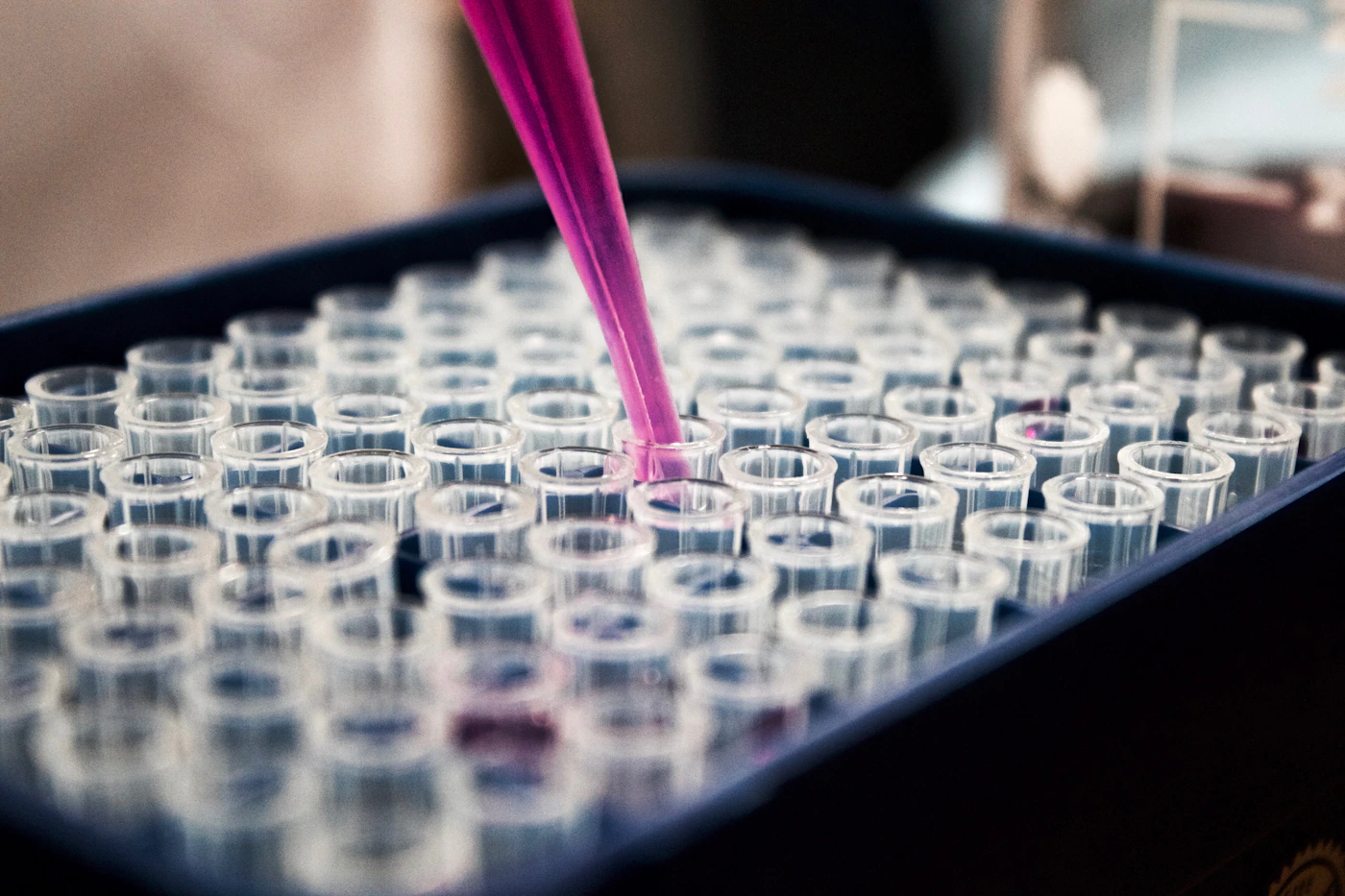
What Are Peptides?
Peptides are chemical compounds consisting of two or more amino acid residues connected by peptide bonds. Amino acids are the basic building blocks used to form many biological molecules, including peptides and proteins. The order of amino acids in a peptide is called its sequence.
A peptide's sequence, length, and chemical properties influence its three-dimensional structure and its behavior under particular experimental conditions. Researchers therefore consider both the molecular structure and the surrounding environment when studying peptides.
The word “peptide” covers a broad range of molecules. Some are relatively short chains, while others contain more amino acid residues and may have complex structural features. The boundary between peptides and proteins is not universal; classification often depends on length, structure, and scientific context.
Understanding Amino Acids and Peptide Bonds
Amino acids contain characteristic chemical groups, including an amino group and a carboxyl group. In common protein-building amino acids, a central carbon is also connected to a hydrogen atom and a variable side chain, often represented by the letter R. Differences in these side chains give amino acids different chemical properties.
How Does a Peptide Bond Form?
A peptide bond is a covalent bond between the carbonyl carbon of one amino acid and the nitrogen of another amino acid's amino group. In the formal condensation reaction, the components combine with the loss of water. In biological systems, ribosomes form peptide bonds as they assemble proteins.
Repeated bond formation creates a chain of amino acid residues. The resulting molecule has a particular sequence and chemical backbone, with side chains extending from that backbone.
Why Does Amino Acid Sequence Matter?
Two peptides can contain the same types of amino acids but have different sequences. That difference can affect molecular folding, solubility, stability, and interactions with other molecules. Researchers use sequence information to identify a target peptide and to interpret experimental results.
Peptides vs. Proteins: What Is the Difference?
Peptides and proteins are both built from amino acids linked by peptide bonds. The distinction is often based on chain length and structural complexity, but there is no single size threshold that applies to every scientific context.
| Feature | Peptides | Proteins |
|---|---|---|
| Building blocks | Amino acid residues | Amino acid residues |
| Typical size | Often shorter chains | Often longer chains |
| Structure | May be relatively simple or structurally complex | Often has defined higher-order folding |
| Scientific study | Sequence, identity, stability, and chemical properties | Sequence, folding, structure, and biological or biochemical function |
These descriptions are general guidelines rather than strict rules. Some peptides have complex structures, and some short proteins overlap with what other fields might describe as peptides. Context is important when interpreting terminology.
Common Types of Peptides
Scientists describe peptides in several ways, including by chain length, amino acid sequence, structure, origin, or research purpose.
Dipeptides and Tripeptides
A dipeptide contains two amino acid residues joined by a peptide bond. A tripeptide contains three residues. These smaller molecules are useful examples for studying peptide chemistry and the relationship between molecular structure and chemical properties.
Oligopeptides
Oligopeptides are relatively short chains of amino acid residues. The exact length used to define an oligopeptide varies across sources and disciplines.
Polypeptides
A polypeptide is a chain of amino acid residues linked by peptide bonds. Longer polypeptide chains can fold into complex structures and form part of proteins.
Natural and Synthetic Peptides
Natural peptides occur in biological systems. Synthetic peptides are produced through chemical synthesis or other manufacturing methods for applications that can include research, analytical reference work, and pharmaceutical development. Their intended use and appropriate quality requirements depend on the specific material and application.

How Peptides Are Studied in Research
Peptides are studied in multiple scientific disciplines. The specific questions researchers ask depend on the peptide, the experimental model, and the research objective.
Biochemistry and Molecular Biology
In biochemistry, researchers investigate amino acid sequences, molecular interactions, structural properties, and the chemical behavior of peptides. Peptides can also serve as tools for examining particular molecular processes in controlled experiments.
Analytical Chemistry
Analytical chemists develop and use methods to separate, identify, and characterize peptide compounds. These techniques can help distinguish a target molecule from related compounds, degradation products, and other components in a sample.
Biomedical and Pharmaceutical Research
Peptides are investigated in biomedical and pharmaceutical research, including work on molecular targets, candidate compounds, and drug development. Results from one peptide or experimental model should not automatically be generalized to other peptides or to humans.
How Scientists Analyze Peptides
Confirming a peptide's identity and evaluating its composition may require more than one analytical method. The most appropriate approach depends on the sample, the intended purpose, and the questions the analysis is designed to answer.
High-Performance Liquid Chromatography (HPLC)
High-performance liquid chromatography separates components in a sample as they pass through a chromatographic column. The resulting chromatogram can help analysts assess the separation of the target compound from other detectable components.
Chromatographic purity is method-dependent. A reported percentage represents the response measured under specified conditions and does not necessarily establish absolute chemical purity, molecular identity, or the absence of every possible contaminant.
Mass Spectrometry (MS)
Mass spectrometry measures ions according to their mass-to-charge ratio. Depending on the method and instrumentation, it can provide evidence about a peptide's molecular mass and help support its identification.
Mass spectrometry results should be interpreted in the context of the method, expected molecular structure, and other available evidence. A matching mass alone may not distinguish every possible structural variant.
Why Use Complementary Methods?
Chromatography and mass spectrometry answer different analytical questions. Combining suitable methods can provide a more informative assessment than relying on a single measurement. Additional testing may be needed to evaluate attributes such as water content, residual solvents, counterions, or other impurities.
For a related overview of analytical documentation, see our laboratory testing and quality assurance information . Check that this URL matches the published page on your website.
Purity, Identity, and Documentation
Laboratory documentation helps communicate what was tested, how the analysis was performed, and what the results indicate. A well-prepared report should be interpreted according to its stated scope and limitations.
What Is a Certificate of Analysis?
A certificate of analysis (COA) is a document that reports analytical results for a specified material or batch. Depending on the product and testing program, it may include the sample or batch identifier, test methods, measured results, acceptance criteria, and the date of testing.
What Should Readers Check?
- Whether the report clearly identifies the sample or batch.
- Which analytical methods were used.
- Whether the reported results include units and acceptance criteria where appropriate.
- Whether the testing laboratory and report date are identified.
- Whether the report covers identity, purity, or other attributes relevant to the intended purpose.
- Whether any limitations or qualifications are stated.
A COA should not be assumed to prove attributes that were not tested. For example, a purity result does not by itself demonstrate sterility, biological activity, or suitability for a particular use.
You can also explore our customer reviews and product listings for additional site information. Confirm that these links point to the intended live pages before publishing.
Frequently Asked Questions About Peptides
1. What are peptides made of?
Peptides are made of amino acid residues linked by covalent peptide bonds. Their sequence and chemical structure distinguish one peptide from another.
2. Are peptides the same as proteins?
No, although they are closely related. Both consist of amino acid chains. Peptides are often shorter, while proteins generally have longer chains and more extensive structural organization. The terminology can overlap depending on context.
3. How do scientists determine peptide identity?
Scientists may use mass spectrometry, chromatography, and other analytical techniques. The best combination depends on the target peptide and the level of identification required.
4. Does a high HPLC purity result prove a sample is pure?
Not by itself. HPLC results depend on the analytical method and detection conditions. Other compounds may not be detected or resolved by a particular method, so additional analysis may be necessary.
5. What is a peptide certificate of analysis?
A COA is a document describing test results for an identified sample or batch. Its meaning depends on the methods used, the attributes tested, and the information included in the report.
6. Why does amino acid sequence matter?
The sequence defines the order of residues in a peptide. Sequence differences can affect molecular properties, structure, stability, and interactions with other compounds.
7. Are all peptides suitable for human use?
No. A peptide's research use, regulatory status, safety, and suitability depend on the specific compound, evidence, formulation, and intended application. Laboratory or research-grade materials should not be assumed to be approved for human use.
Scientific References and Further Reading
The following educational references provide further information about peptide chemistry, amino acids, and protein structure.
- NCBI Bookshelf — Protein Structure and Function. An overview of peptide bonds, amino acid residues, and protein structural organization. Read the scientific reference .
- NCBI Bookshelf — Biochemistry, Essential Amino Acids. Background on amino acid structure and the role of amino acids in peptide and protein formation. Read the scientific reference .
- NCBI Bookshelf — The Shape and Structure of Proteins. An explanation of peptide bonds, polypeptide backbones, and amino acid side chains. Read the scientific reference .
Conclusion
Peptides are amino acid-based molecules that form an important part of modern biochemical and analytical research. Their sequences and structures provide the foundation for understanding their chemical properties, while analytical techniques help scientists investigate identity, composition, and sample characteristics.
A sound understanding of peptide science also requires careful interpretation of laboratory results. Analytical reports, certificates of analysis, and research findings should always be evaluated in relation to the methods used and the conclusions those methods can support.
Educational notice: This article is intended for general scientific education and is not medical advice. Research findings and laboratory analytical results do not establish that a material is safe or appropriate for human use.
What Are Peptides? Understanding Their Structure and Scientific Importance
If you are asking what peptides are, the starting point is their molecular structure. Peptides are molecules made from amino acids connected by peptide bonds. The order of those amino acids, the length of the chain, and the molecule's chemical properties help determine how a particular peptide behaves in a scientific setting. Understanding what peptides are therefore begins with understanding amino acids and how they form chains.
In biochemistry, peptides are studied because amino acid sequences are central to many biological processes. Researchers investigate peptide structure, chemical composition, molecular mass, stability, and interactions using a range of laboratory methods. These investigations help scientists characterize molecules and develop a more complete understanding of their properties.
How Are Peptides Formed?
To understand what peptides are, it helps to examine the chemistry that connects amino acids. A peptide bond forms between the carboxyl group of one amino acid and the amino group of another. Repeated bonding creates a chain with a specific amino acid sequence.
The sequence is important because amino acids differ in properties such as size, electrical charge, and how they interact with water and other chemical environments. As a result, two peptides with similar lengths can have different structures and analytical characteristics.
Why amino acid sequence matters
- Composition: The amino acids present contribute to a peptide's chemical properties.
- Sequence: The order of the amino acids defines the primary structure.
- Length: The number of amino acid residues influences molecular mass and other properties.
- Environment: Temperature, pH, solvents, and other conditions can influence peptide stability and behavior.
What Are Peptides Compared With Proteins?
Peptides and proteins share the same basic building blocks, but the terms are not always interchangeable. The word peptide often refers to a relatively short amino acid chain, while protein commonly describes a larger molecule or a chain that forms a specific three-dimensional structure. There is no single chain length that separates every peptide from every protein in all scientific contexts.
When scientists determine what peptides are in a particular sample, they consider more than the name used to describe the molecule. Molecular mass, amino acid sequence, structural characteristics, and the analytical question being investigated can all be relevant.
How Do Scientists Analyze Peptides?
Knowing what peptides are is only one part of peptide research. Laboratory analysis can help investigate whether a sample's measured properties are consistent with the intended material. Different analytical techniques answer different questions, so results should be interpreted in context rather than treated as interchangeable measures of quality.
High-performance liquid chromatography (HPLC)
HPLC separates components in a sample based on how they interact with a stationary phase and a moving liquid phase. Researchers can use chromatographic data to assess the separation profile and, under appropriate conditions, estimate the relative abundance of detected components. A reported chromatographic purity percentage does not automatically establish molecular identity or prove that every possible impurity has been detected.
Read our guide to HPLC testing for peptides for more detail on chromatograms, separation, and the interpretation of analytical purity results.
Mass spectrometry
Mass spectrometry measures the mass-to-charge ratio of ions. Depending on the method and experimental conditions, it can help researchers investigate molecular mass and obtain information relevant to peptide identification. Tandem mass spectrometry can provide additional structural information through the analysis of fragment ions.
Learn more in our educational guide to peptide mass spectrometry .
Certificates of analysis
A certificate of analysis, often abbreviated as COA, records information about a specified sample or batch and its reported analytical results. The usefulness of a COA depends on factors such as traceable sample identification, the methods used, the results reported, and the documentation available to support those results.
For a practical explanation, see how to read a peptide certificate of analysis . You can also visit our laboratory quality assurance page for related information about testing and documentation.
What Are Peptides? Frequently Asked Questions
What are peptides made of?
Peptides are made of amino acids connected by peptide bonds. Their amino acid composition and sequence contribute to their chemical and structural properties.
What are peptides used for in scientific research?
Peptides are studied in fields including biochemistry, molecular biology, analytical chemistry, and pharmaceutical research. The purpose of a study depends on the specific molecule, research question, and applicable scientific and regulatory requirements.
How are peptides different from proteins?
Both consist of amino acid chains. Peptides often refer to shorter chains, whereas proteins generally involve larger chains or defined three-dimensional structures. The terminology can overlap, and no single length cutoff applies universally.
Can HPLC alone confirm a peptide's identity?
Not usually. HPLC provides information about chromatographic separation and the detected components under the method's conditions. Identity generally requires suitable supporting evidence, which may include mass spectrometry or other complementary analytical techniques.
Why does analytical testing matter when studying peptides?
Appropriate analytical testing helps researchers evaluate characteristics such as separation behavior and molecular mass. The methods required depend on the material and the question being asked, and no single test establishes every aspect of sample quality or identity.
Continue Learning About Peptide Science
Now that you understand what peptides are and how scientists study them, explore these related guides to learn more about analytical methods and laboratory documentation.